🚿 Introduction: Why Shower Technique Matters
Underarm odor doesn’t just come from sweat — it comes from how sweat interacts with bacteria on your skin. The good news? The way you shower can dramatically reduce odor. In this guide, you’ll learn shower techniques that keep your underarms clean, healthy, and smelling fresh — every day. 🌿✨
🧼 1. Choose the Right Cleanser 🧴
👉 Use a mild antibacterial or pH-balanced body wash.
Your underarm skin has a delicate pH (typically 4.5–5.5). Harsh soaps can disrupt it and actually increase odor-causing bacteria. A gentle antibacterial body wash or one made for sensitive skin cleans without irritation.
Tips:
- Avoid strong perfumes and sulfates
- Look for ingredients like tea tree, glycolic acid, or lactic acid
📌 Why this matters: Bacteria break down sweat and produce odor. A good cleanser reduces bacterial load right at the source.
💦 2. Warm Water First, Then Rinse With Cool 🌡️
✔ Warm water opens pores and loosens dead skin, oil, and bacteria.
✔ Cool rinse closes pores and refreshes skin, reducing sweat production.
Technique:
- Start with warm water for 1–2 minutes
- Gently wash underarms (don’t scrub aggressively)
- Final rinse with cool water
This combo boosts cleanliness and helps your skin feel refreshed throughout the day.
🖐 3. Use Gentle Circular Motions ✨
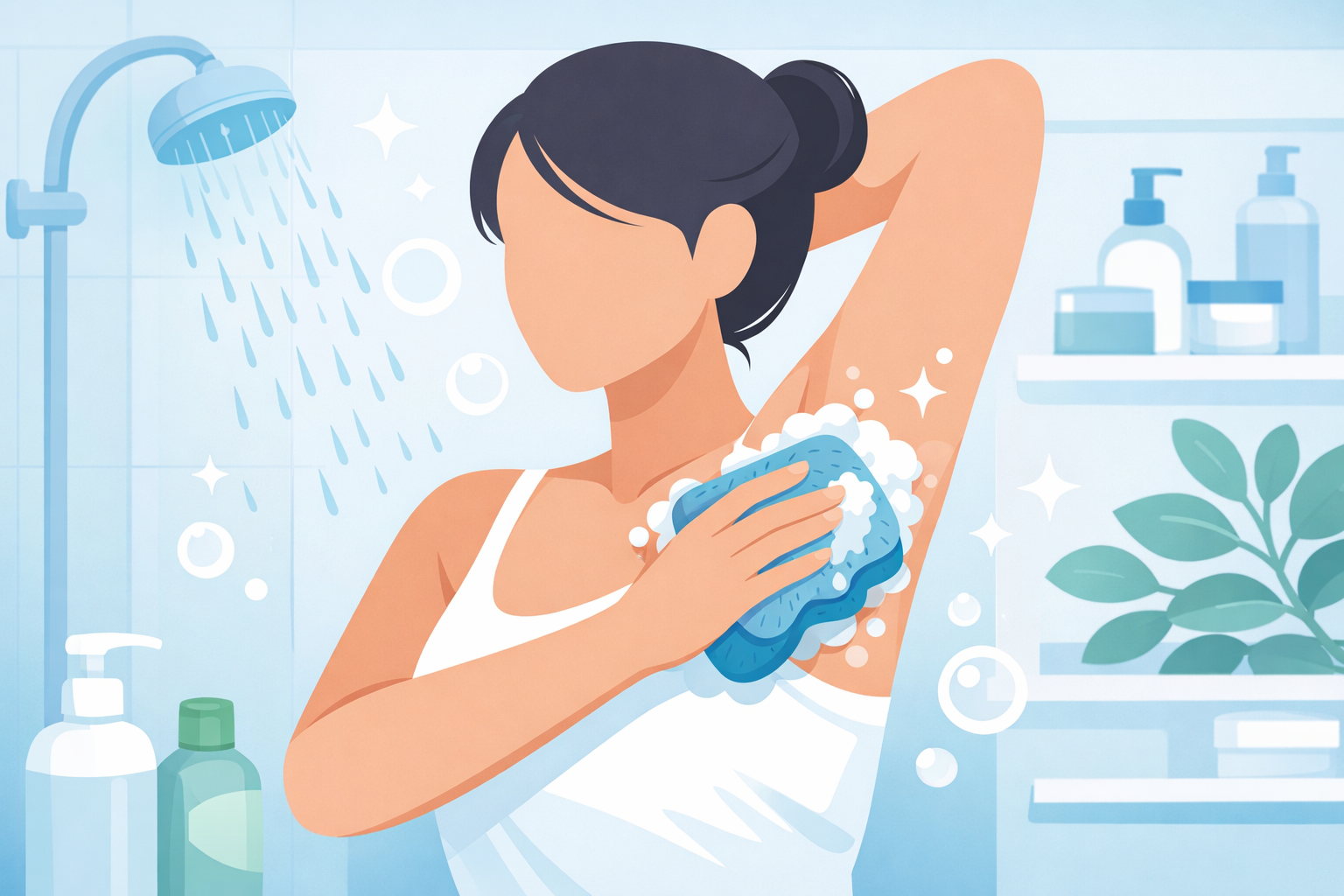
Avoid rough scrubbing! Use a soft washcloth or loofah and move in small, circular strokes — this lifts away odor-causing bacteria without damaging skin.
Steps:
➡️ Lather the body wash
➡️ Massage underarm in gentle circles
➡️ Rinse thoroughly
❗ Over-scrubbing can irritate skin and increase sweating, which makes odor worse.
🫧 4. Don’t Forget the Under-Arm Folds 🧬
Bacteria thrive in folds and skin creases. Make sure you wash all underarm skin, including the front and back of your armpit, not just the outer visible area. This might feel subtle, but it makes a big difference in odor control.
🕒 5. Shower at the Right Time ⏰
Timing can change how long you stay fresh:
✔ Morning showers help remove overnight bacterial buildup
✔ Post-workout showers stop sweat from settling
✔ Evening showers clear oils and bacteria before bed
If you sweat a lot, consider two shorter showers — one after exercise and one before bed.
🧴 6. Dry Properly Before You Apply Products ☁️
Moisture trapped against skin = bacterial playground. Pat your underarms completely dry with a clean towel. Then apply your deodorant/antiperspirant.
👉 Why it matters: Damp skin reduces the effectiveness of deodorants and antiperspirants, which need a dry surface to work best.
👕 7. Shower Smart Based on Your Sweat Type 🩺
If you sweat heavily:
- Focus on duration and thorough cleaning
- Consider cleansing with antibacterial soap
If your skin is sensitive:
- Use gentle pH-balanced products
- Limit scrubbing
- Rinse cool to soothe skin
Everyone’s body chemistry is different — fine-tune your shower to your needs.
🌿 8. Add an Exfoliation Routine (Weekly) 🪥
Odor-causing bacteria stick to dead skin. Exfoliate gently once or twice a week using a soft scrub or chemical exfoliant with lactic glycolic acids.
🧴 Not for daily use — too much exfoliation can irritate underarm skin.
🧠 Quick Checklist for Odor-Free Showers
✅ Warm rinse (1–2 min)
✅ Gentle circular cleanse underarms
✅ Rinse thoroughly
✅ Cool rinse finish
✅ Dry completely
✅ Apply deodorant/antiperspirant
⛔ Common Shower Mistakes That Cause Odor
❌ Using harsh, high-pH soaps
❌ Skipping the underarm folds
❌ Aggressive scrubbing
❌ Not drying before product application
❌ Waiting too long between showers
Avoid these to stay fresher, longer.
🧩 Internal Linking Suggestions
To boost SEO and keep readers engaged, add links to:
🔗 Best Deodorants for Sensitive Skin
🔗 How to Prevent Underarm Darkness (Safe Solutions)
🔗 Natural Remedies to Reduce Sweat and Odor
🔗 Post-Workout Personal Care Guide
📚 Scientific References
- Rosenberg A. “Skin pH and Microbial Activity in Odor Formation.” Journal of Dermatological Science, 2018.
- Smith L, et al. “Effect of Antiperspirant Ingredients on Skin.” International Journal of Cosmetic Science, 2012.
Leave a Reply