
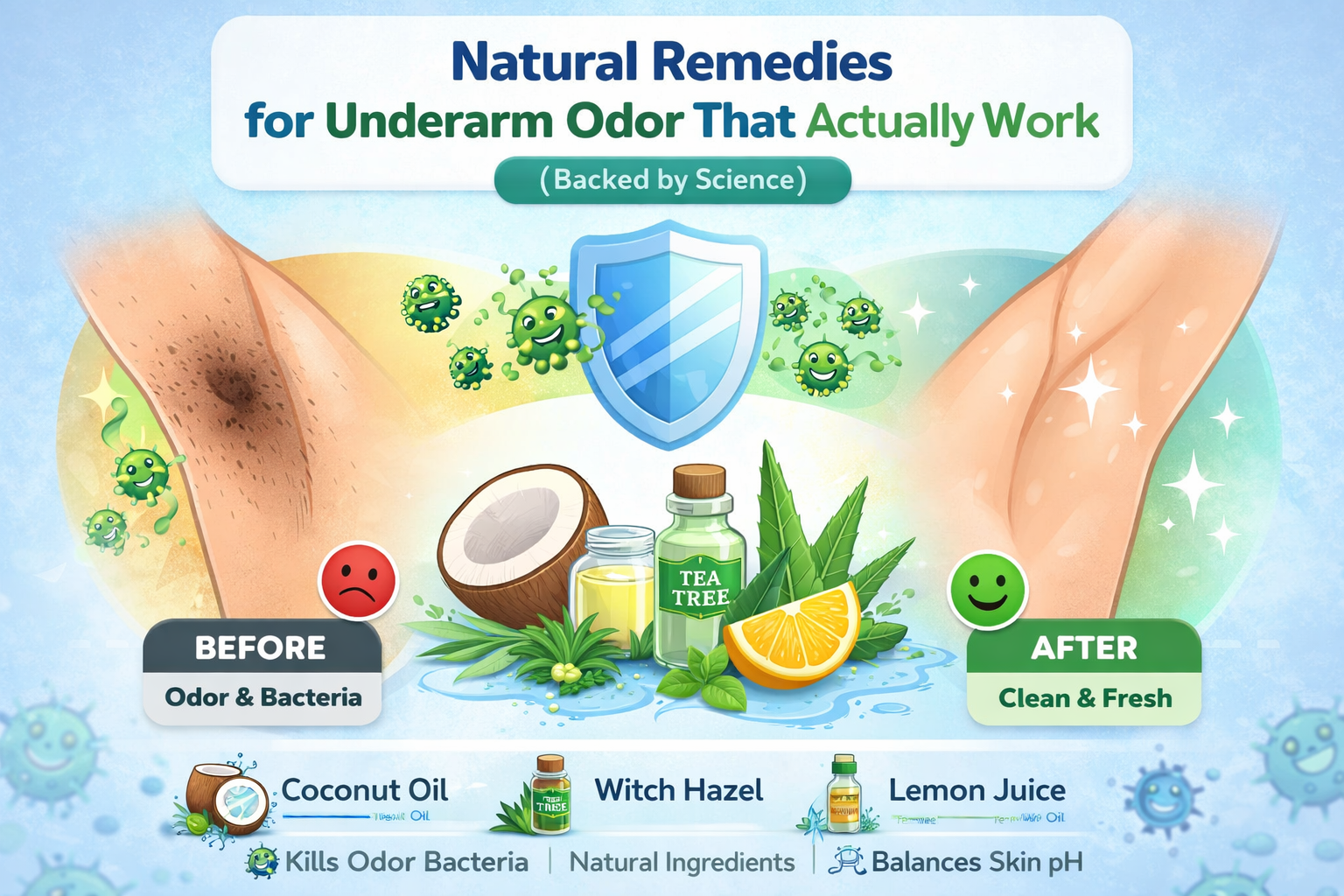
🤔 Introduction: Do Natural Remedies Really Work?
If you’re trying to avoid chemicals or your deodorant isn’t working anymore, you’ve probably searched for natural solutions.
But here’s the truth:
👉 Not all “natural remedies” are effective.
Underarm odor is caused by bacteria breaking down sweat — so any real solution must:
- Kill bacteria 🦠
- Reduce moisture 💧
- Balance skin pH ⚖️
Let’s look at the remedies that are actually backed by science.
🧠 What Causes Underarm Odor?
Sweat itself doesn’t smell. The odor happens when:
👉 Skin bacteria break down sweat into acids.
This is why targeting bacteria is key.
✅ Natural Remedies That Actually Work
🥥 1. Coconut Oil (Antibacterial Power)
Coconut oil contains lauric acid, which helps fight odor-causing bacteria.
✔️ How to use:
Apply a small amount to clean underarms daily.
⚠️ Tip: Use a thin layer to avoid clogged pores.
🍏 2. Apple Cider Vinegar (pH Balancer)
Apple cider vinegar helps:
- Kill bacteria 🦠
- Balance skin pH
✔️ How to use:
Dilute with water and apply using a cotton pad.
⚠️ Avoid right after shaving (can irritate skin).
🍋 3. Lemon Juice (Natural Antibacterial)
Lemon has natural antibacterial properties and can reduce odor.
✔️ How to use:
Apply lightly, then rinse after a few minutes.
⚠️ Avoid if you have sensitive skin or cuts.
🌿 4. Aloe Vera (Soothing + Antibacterial)
Aloe vera helps:
- Soothe irritation
- Reduce bacteria
✔️ Perfect for sensitive skin.
🧂 5. Baking Soda (Odor Neutralizer)
Baking soda neutralizes odor and absorbs moisture.
✔️ How to use:
Mix with a little water to form a paste.
⚠️ Use carefully — can irritate some skin types.
🌱 6. Witch Hazel (Natural Astringent)
Witch hazel helps:
- Tighten pores
- Reduce sweating
- Kill bacteria
✔️ Great natural alternative to antiperspirants.
🍃 7. Tea Tree Oil (Powerful Antibacterial)
Tea tree oil is one of the most effective natural antibacterials.
✔️ How to use:
Dilute with water or carrier oil before applying.
⚠️ Never use undiluted.
⚖️ Natural Remedies vs Deodorants
| Feature | Natural Remedies 🌿 | Deodorants 🧴 |
|---|---|---|
| Odor control | ✅ Moderate | ✅ Strong |
| Sweat control | ❌ Limited | ✅ Strong (antiperspirants) |
| Skin sensitivity | ✅ Usually gentle | ❌ Can irritate |
👉 Natural options work best for mild to moderate odor.
🚫 Natural Remedies That DON’T Work Well
Not everything “natural” is effective:
- ❌ Perfumes (just mask odor)
- ❌ Water rinsing only
- ❌ Random DIY mixes without antibacterial effect
💡 Tips to Make Natural Remedies Work Better
- Apply on clean, dry skin
- Stay consistent 🔁
- Combine with good hygiene
- Wear breathable fabrics 👕
👉 Related:
➡️ Best Clothing Materials for People Who Sweat a Lot
🚨 When Natural Remedies Aren’t Enough
If you have:
- Strong or persistent odor
- Excessive sweating
You may need:
- Clinical-strength antiperspirants
- Medical treatment
👉 Read:
➡️ Why Your Deodorant Suddenly Stops Working and How to Fix It
🧾 Final Thoughts
Natural remedies can work — but only if they target bacteria and moisture.
✔️ Best options: coconut oil, tea tree oil, witch hazel
✔️ Be consistent for results
✔️ Choose what fits your skin type
👉 The goal isn’t just to smell good — it’s to keep your skin balanced and healthy.
🔗 Related Articles (Internal Linking)
- 👉 The Science of Sweat: Why We Smell and How Deodorants Really Work
- 👉 Why Do My Armpits Smell Even After a Shower?
- 👉 The Best Shower Techniques to Prevent Underarm Odor
📚 Sources
- American Academy of Dermatology (AAD) – Body odor causes and hygiene
- Mayo Clinic – Bromhidrosis (body odor) overview
- International Journal of Cosmetic Science – Antibacterial effects of natural oils
- Journal of Dermatological Science – Skin microbiome and odor formation
- National Institutes of Health (NIH) – Tea tree oil antimicrobial properties
Leave a Reply