🤔 Everyone Sweats, But How Much Is Too Much?
Sweating is completely normal.
Your body uses sweat to:
- cool itself down
- regulate temperature
- respond to exercise, stress, and heat
But sometimes sweating becomes excessive and difficult to control.
If you constantly:
- soak through shirts
- avoid certain colors
- feel embarrassed in social situations
- sweat even when it’s cold
…you may be dealing with something more than “normal sweating.”
That condition is called hyperhidrosis.
💦 What Is Normal Sweating?
Normal sweating happens when your body needs to cool down.
Common triggers include:
- hot weather
- exercise
- stress or anxiety
- spicy foods
- fever
- heavy clothing
With normal sweating:
✅ it usually stops after cooling down
✅ it matches the situation
✅ it doesn’t severely affect daily life
Most people sweat more:
- during workouts
- in summer
- under stress
That’s completely natural.
🚨 What Is Hyperhidrosis?
Hyperhidrosis is excessive sweating that goes beyond what the body actually needs.
People with hyperhidrosis may sweat:
- without heat
- without exercise
- while resting
- even in cool environments
The sweating can become strong enough to:
- soak clothing quickly
- drip from underarms or hands
- interfere with work or social life
- cause emotional stress
Hyperhidrosis affects millions of people worldwide and is more common than many realize.
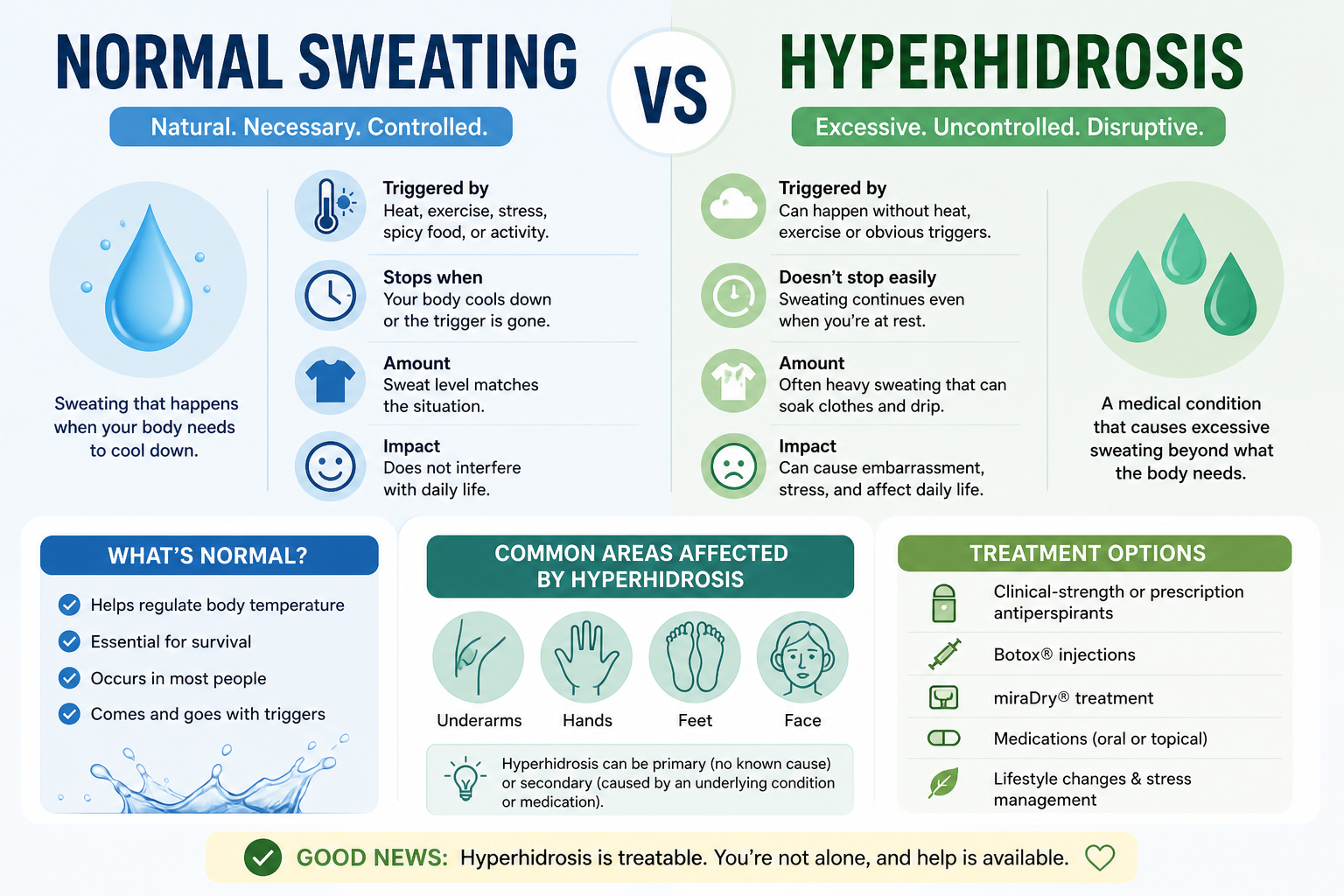
🔍 Key Differences: Normal Sweating vs Hyperhidrosis
| Feature | Normal Sweating | Hyperhidrosis |
|---|---|---|
| Triggered by heat/exercise | ✅ Usually | ❌ Not always |
| Stops after cooling down | ✅ Yes | ❌ Often continues |
| Soaks through clothes easily | ❌ Usually no | ✅ Frequently |
| Happens during rest | ❌ Rarely | ✅ Common |
| Interferes with daily life | ❌ No | ✅ Often |
| Causes emotional stress | Sometimes | Frequently |
🧠 Types of Hyperhidrosis
1) Primary Hyperhidrosis
This is the most common type.
It usually:
- starts in childhood or teenage years
- affects specific areas
- runs in families sometimes
Common areas:
- underarms
- hands
- feet
- face
Doctors still don’t fully know why it happens, but nerves controlling sweat glands may become overactive.
2) Secondary Hyperhidrosis
This type happens because of another condition or medication.
Possible causes include:
- thyroid problems
- diabetes
- infections
- menopause
- anxiety disorders
- certain medications
Secondary hyperhidrosis may affect larger areas of the body.
👕 Signs Your Sweating May Be Excessive
You may want to talk to a doctor if you:
- change shirts multiple times daily
- avoid raising your arms
- sweat heavily without activity
- constantly stain clothing
- feel anxious about sweating
- sweat enough to interrupt daily activities
These are common signs of hyperhidrosis.
🌡️ Why Underarms Sweat So Much
Underarms contain many apocrine sweat glands.
These glands:
- become active during puberty
- produce thicker sweat
- interact strongly with skin bacteria
That’s why underarm sweating often creates:
- wetness
- odor
- yellow stains
- irritation
🧴 Treatments for Hyperhidrosis
The good news:
Hyperhidrosis is treatable.
Treatment options include:
✅ Clinical-Strength Antiperspirants
Usually the first step.
These contain stronger sweat-blocking ingredients than regular products.
✅ Prescription Antiperspirants
Doctors may prescribe stronger formulas for severe sweating.
✅ Botox Injections
Botox can temporarily block sweat gland nerve signals.
Effects often last several months.
✅ miraDry
A treatment that uses thermal energy to reduce underarm sweat glands permanently.
✅ Oral Medications
Sometimes used in more severe cases.
✅ Lifestyle Changes
Helpful habits include:
- wearing breathable fabrics
- avoiding tight synthetic clothing
- using moisture-wicking shirts
- showering after workouts
- applying antiperspirant at night
🌙 Why Nighttime Antiperspirant Works Better
Dermatologists often recommend applying antiperspirant before bed.
Why?
Because sweat glands are less active during sleep, helping the product work more effectively overnight.
This can improve:
✅ dryness
✅ odor control
✅ next-day protection
🧼 Can Anxiety Cause Excessive Sweating?
Yes.
Stress and anxiety can activate sweat glands very quickly.
This is especially common in:
- social situations
- presentations
- interviews
- stressful environments
For some people, sweating itself creates more anxiety — leading to a frustrating cycle.
⚠️ When to See a Doctor
You should seek medical advice if sweating:
- suddenly becomes severe
- happens mostly at night
- affects your entire body
- comes with weight loss or fever
- strongly impacts daily life
A doctor can help rule out underlying medical causes.
✅ Final Thoughts
Normal sweating is part of being human.
But if sweating feels extreme, unpredictable, or emotionally exhausting, it may be hyperhidrosis — and you’re definitely not alone.
The important thing to remember:
👉 Excessive sweating is treatable.
With the right products, habits, and medical support when needed, many people dramatically improve their comfort and confidence.
Leave a Reply